Think about teacher training programmes1 you have attended (as a trainee or as a trainer). The structure most of the times is different from the one in a foreign language course, or a mathematics lesson. There are specific elements to be considered when taking or providing a training programme.
As language coordinators, you can use specific models for your training sessions, for meetings with your team, or even for specific post-feedback purposes. Some of these practices can be adapted for language teaching lessons.
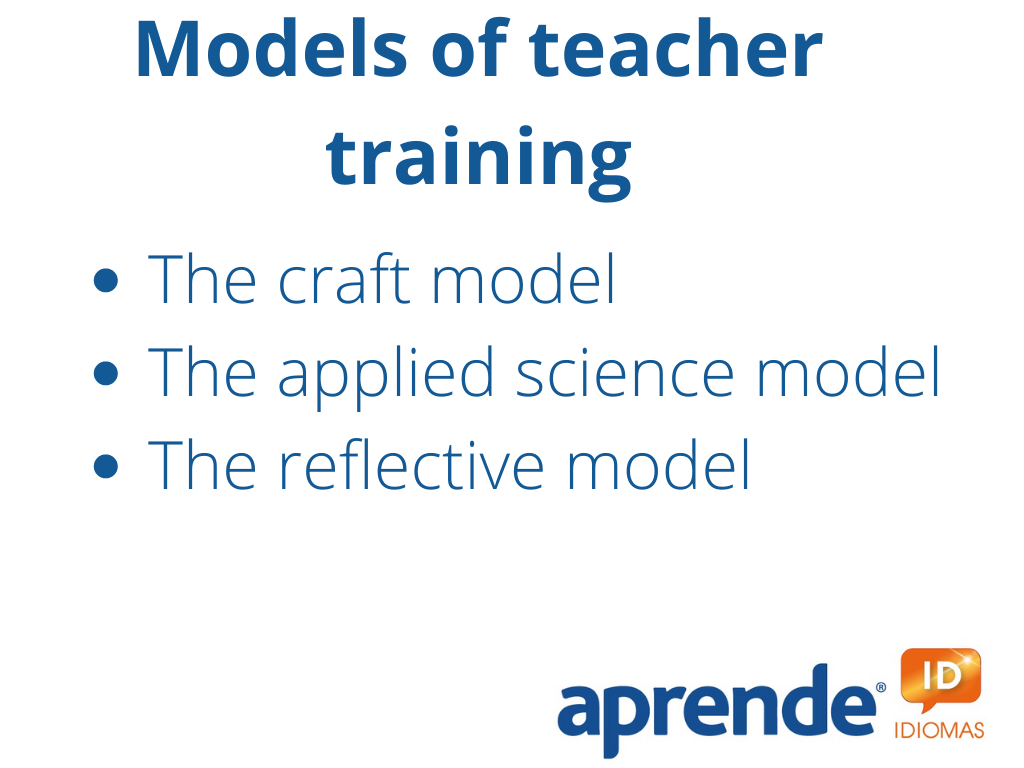
First and foremost we will analyse2 the three models of teacher training:
1 AmE: program/BrE: programme
2 AmE: analyze/ BrE: analyse
Teacher training is essential not just for those entering the field but also for seasoned professionals. Continuous development is key to staying effective, and different models of teacher training offer us unique ways to grow in our practice.

We will explore three key models of teacher training that offer different approaches to professional development: the Craft Model, the Applied Science Model, and the Reflective Model. Each model focuses on a different way of learning and growing as educators, and understanding them will help us choose the most appropriate path for our own growth or for those we mentor.
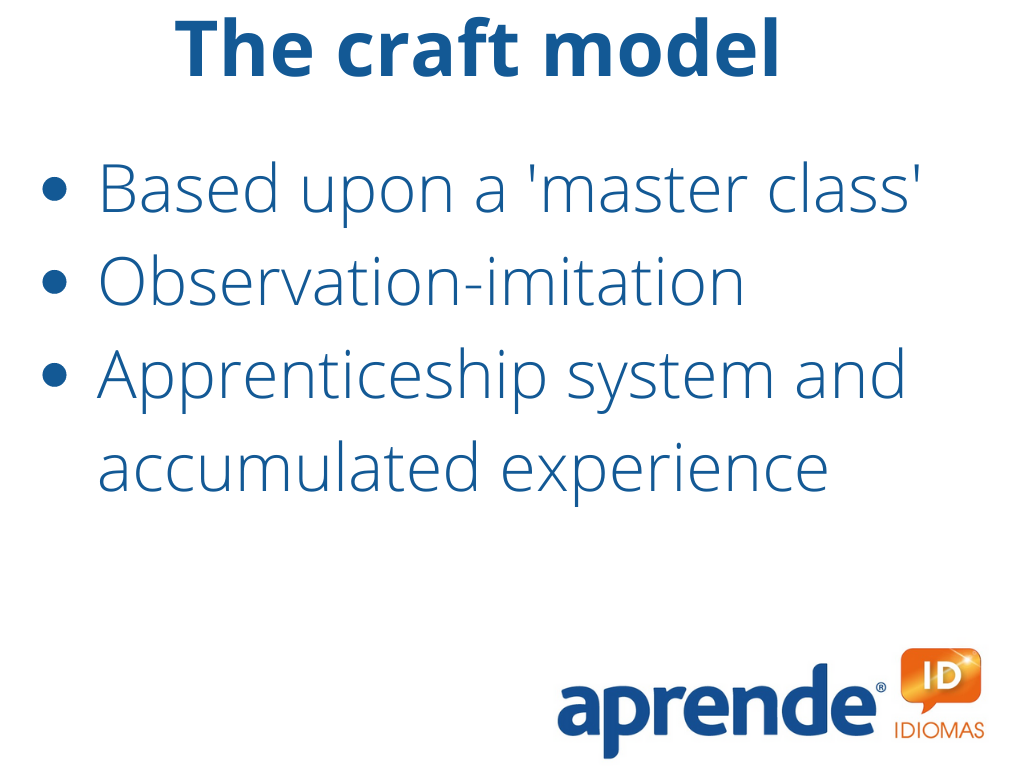
The craft model of teacher training has its roots in the apprenticeship system, which was commonly used in traditional trades like carpentry or blacksmithing. In the context of teaching, it involves a more experienced teacher (the “master”) showing a novice (the “apprentice”) how to teach, often through direct observation and imitation. This model is hands-on and focuses on the accumulation of experience over time, rather than formal education or theoretical frameworks.
Historical Context:
The craft model has been around for centuries, especially in professions like teaching, where one learns by doing, typically under the mentorship of someone with extensive experience. The emphasis is on learning by example and acquiring skills through practice.
Key Elements:
- Observation and Imitation: Novice teachers observe their mentors teaching, often imitating their methods to gain proficiency.
- Experience Accumulation: The focus is on the day-to-day experience in the classroom, with an emphasis on learning through trial and error.
- Mentorship: In this model, a mentor plays a crucial role in guiding the novice teacher.
Pros:
- Practical Focus: Teachers learn real-world skills that they can apply directly in the classroom.
- Hands-On Approach: Teachers get immediate experience, and the feedback loop is quick.
- Personalized Learning: The relationship between mentor and apprentice allows for individualized support and feedback.
Cons:
- Limited Theoretical Foundation: The craft model may neglect important theoretical underpinnings such as pedagogy, linguistics, and educational psychology.
- Risk of Perpetuating Bad Practices: Since the model relies on imitation, there’s a chance that ineffective teaching practices are passed down from one teacher to the next.
- Less Emphasis on Innovation: The model tends to focus on replicating existing methods, potentially stifling creativity or the development of new teaching techniques.
The craft model is not entirely obsolete but has been largely overshadowed by more modern approaches that integrate theory and practice. However, it is still in use today, especially in mentorship or induction programs for new teachers.
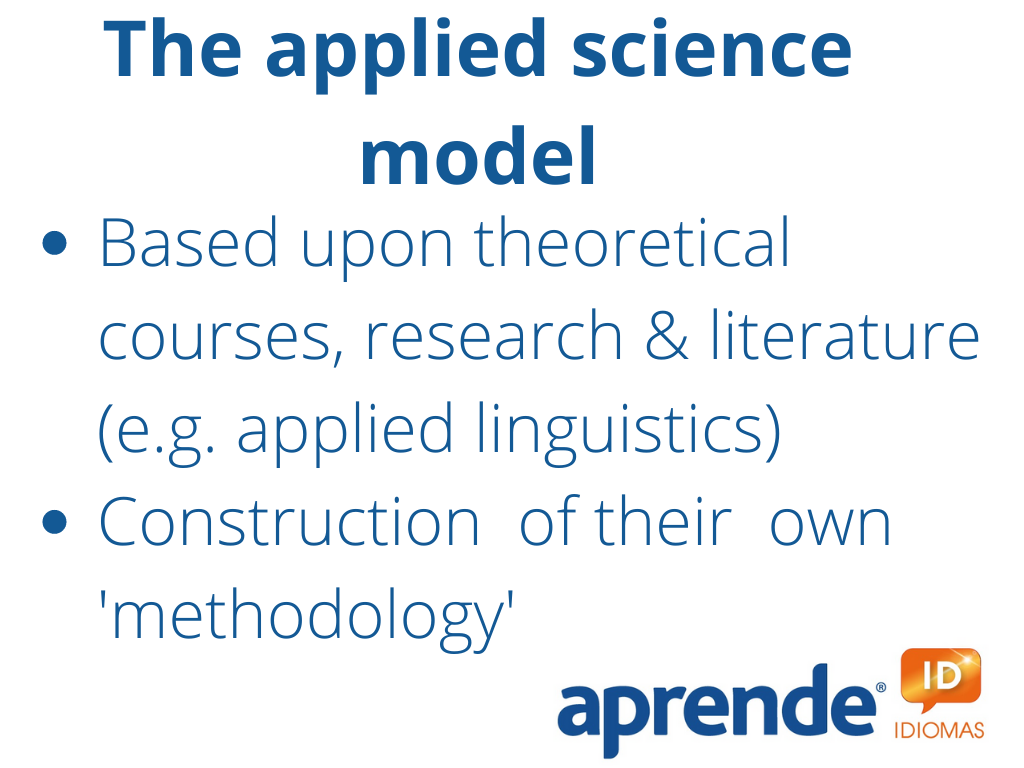
The applied science model views teaching as a discipline that can be improved through the study of theory, research, and literature. This model is often associated with fields like applied linguistics, where research and academic study form the basis for teaching practices. Teachers are expected to construct their own methodology based on the principles they learn from academic sources.
Historical Context:
This model gained prominence in the mid-20th century with the rise of applied linguistics and educational psychology. It reflects a shift toward more formalized, evidence-based approaches to teaching.
Key Elements:
- Research-Based: Emphasis is placed on the study of research, applied linguistics, and pedagogy.
- Theory to Practice: Teachers learn theoretical frameworks, which they are then expected to apply in their teaching.
- Methodology Construction: Teachers are encouraged to build their own teaching methods based on the theoretical knowledge they acquire.
Pros:
- Strong Theoretical Foundation: Teachers are armed with research-backed methods and principles, which can help improve the overall quality of instruction.
- Adaptability: Teachers can modify and adapt methods based on evolving research and student needs.
- Evidence-Based Practices: Research-driven approaches ensure that teachers are using the most effective strategies.
Cons:
- Disconnect from Practice: Sometimes, the theory-to-practice connection can be weak, with teachers struggling to apply abstract concepts in real-world classrooms.
- Time-Consuming: The amount of academic study required may be overwhelming for some teachers, and not all research is directly applicable to the classroom.
- May Overlook Context: Research tends to be generalized, which can overlook the specific context in which a teacher works (e.g., class size, socio-economic factors).
The applied science model is not obsolete. It remains a central component of many teacher training programs today, particularly in graduate-level programs in education and applied linguistics.
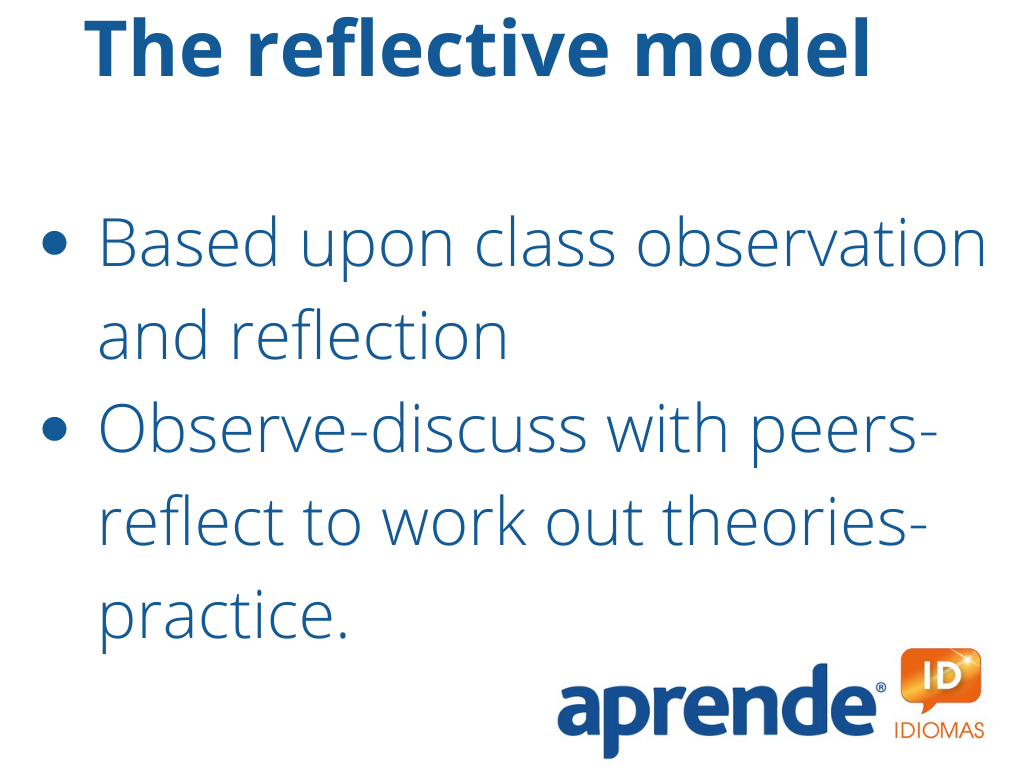
The reflective model, pioneered by educators like Donald Schön in the 1980s, emphasizes the importance of observation, self-reflection, and ongoing professional development. In this model, teachers engage in cycles of observation, discussion, reflection, and practice, allowing them to work out their own teaching theories based on their experiences.
Historical Context:
Donald Schön’s work on reflective practice was influential in encouraging teachers to think critically about their own teaching methods. Reflective practice also draws on the work of John Dewey, who advocated for experiential learning and reflection in education.
Key Elements:
- Classroom Observation: Teachers observe classes (either their own or others’) to understand teaching techniques and student responses.
- Reflection: After observation, teachers reflect on their practice, considering what worked and what didn’t.
- Discussion and Collaboration: Teachers discuss their experiences with peers to share insights and perspectives.
- Ongoing Cycle: This process is continuous, allowing teachers to refine their skills and theories over time.
Pros:
- Personalized Learning: Teachers reflect on their own practices, leading to tailored professional growth.
- Collaborative: Teachers learn from each other through discussion and shared experiences.
- Promotes Critical Thinking: Encourages teachers to think deeply about their practices and how they can improve.
Cons:
- Time-Consuming: Reflective practices can take up a lot of time and may be difficult to implement in schools with heavy teaching loads.
- Requires Strong Support: The success of reflective practice depends heavily on the presence of a supportive community and access to peer observations.
- Subjectivity: Reflection may be biased by personal experiences and emotions, which can sometimes cloud objective evaluation.
The reflective model is widely regarded as a valuable approach to teacher development and is actively used today in many professional development programs. It is especially important in post-initial training, where teachers are refining their skills and adapting to different classroom settings.
Now that we’ve explored the three teacher training models, let’s think about the prior lesson about the 3Rs at how each model can help us build Resilience, Resourcefulness, and Reflection—the core elements for ongoing growth as educators.
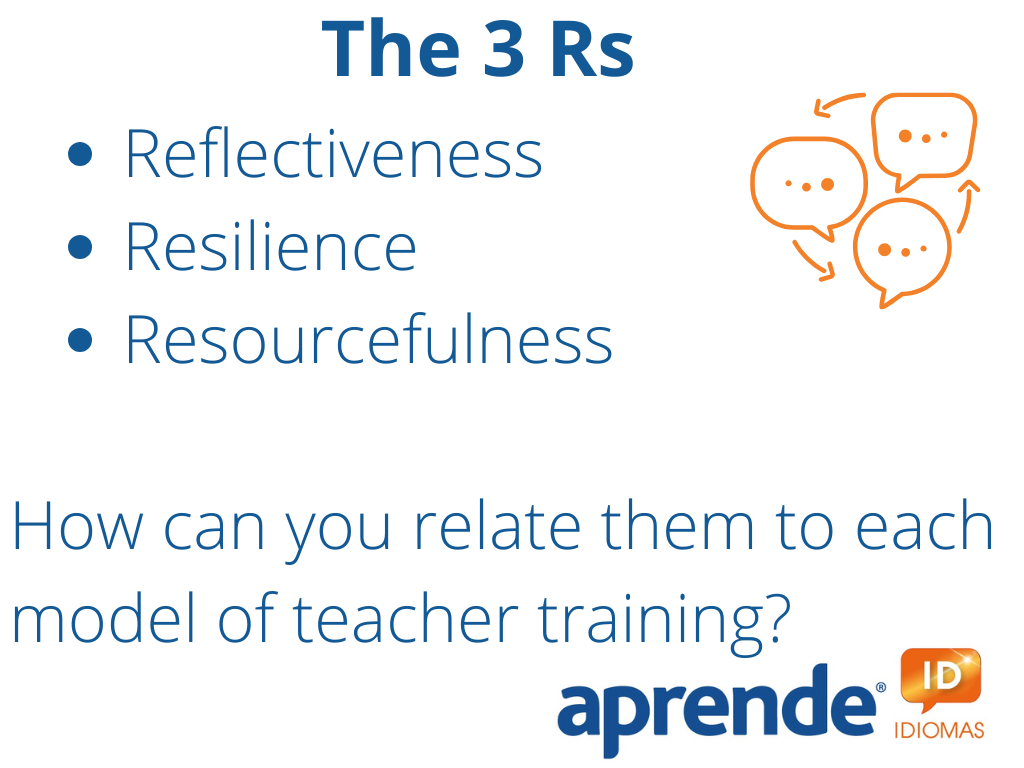
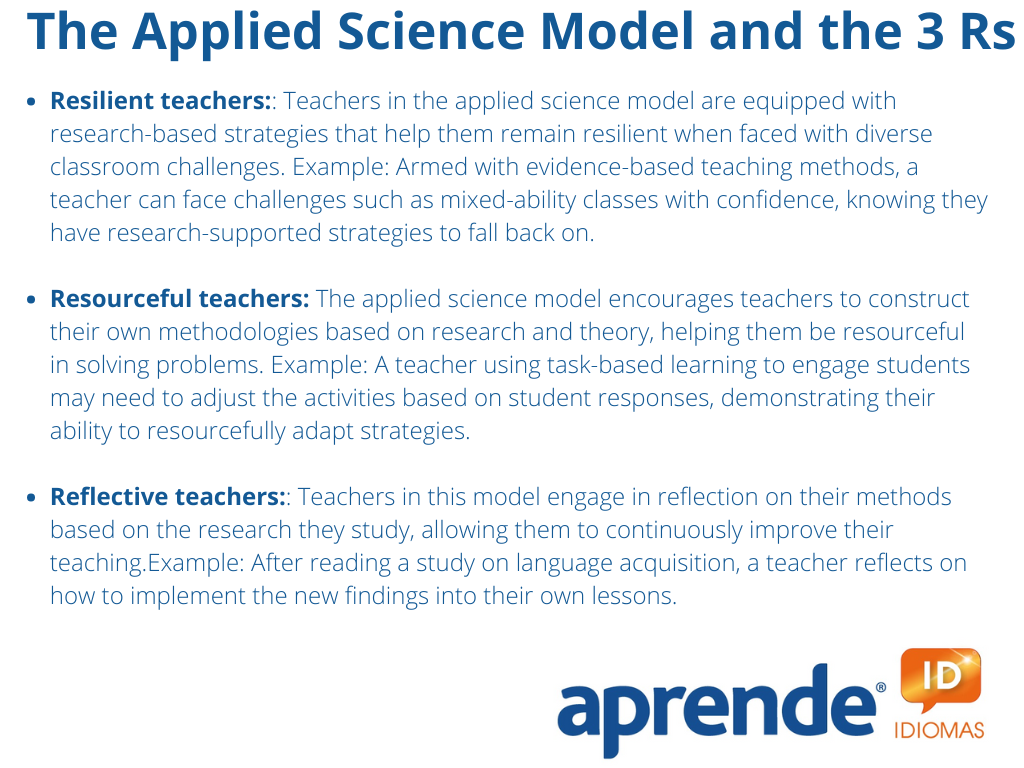
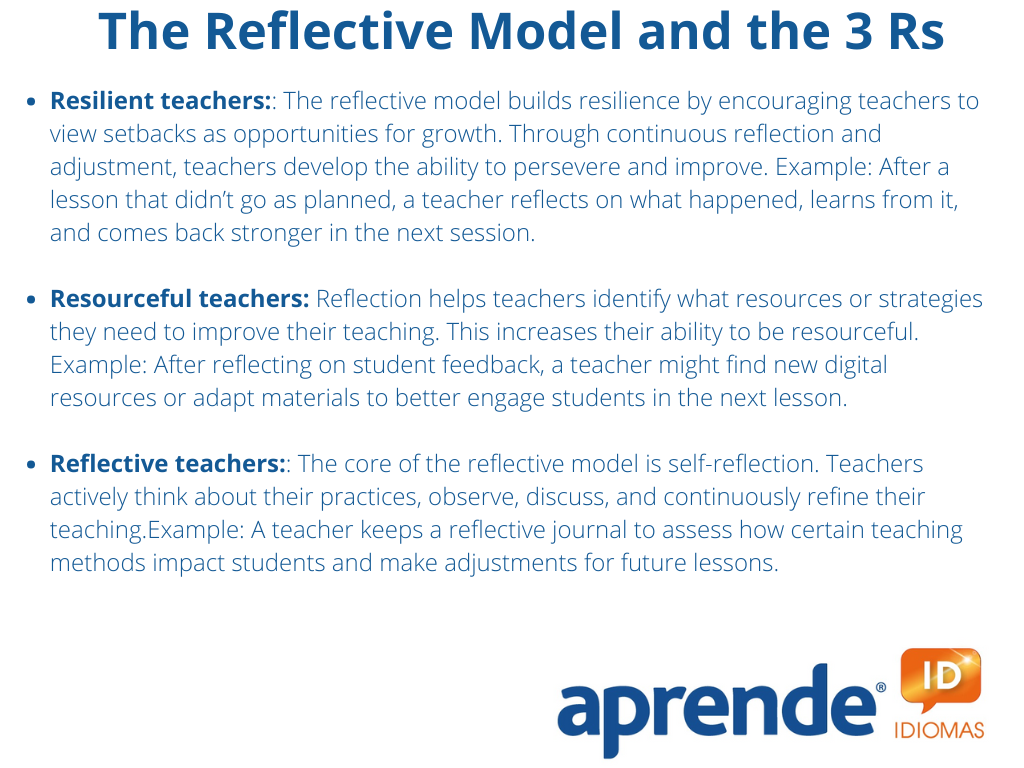
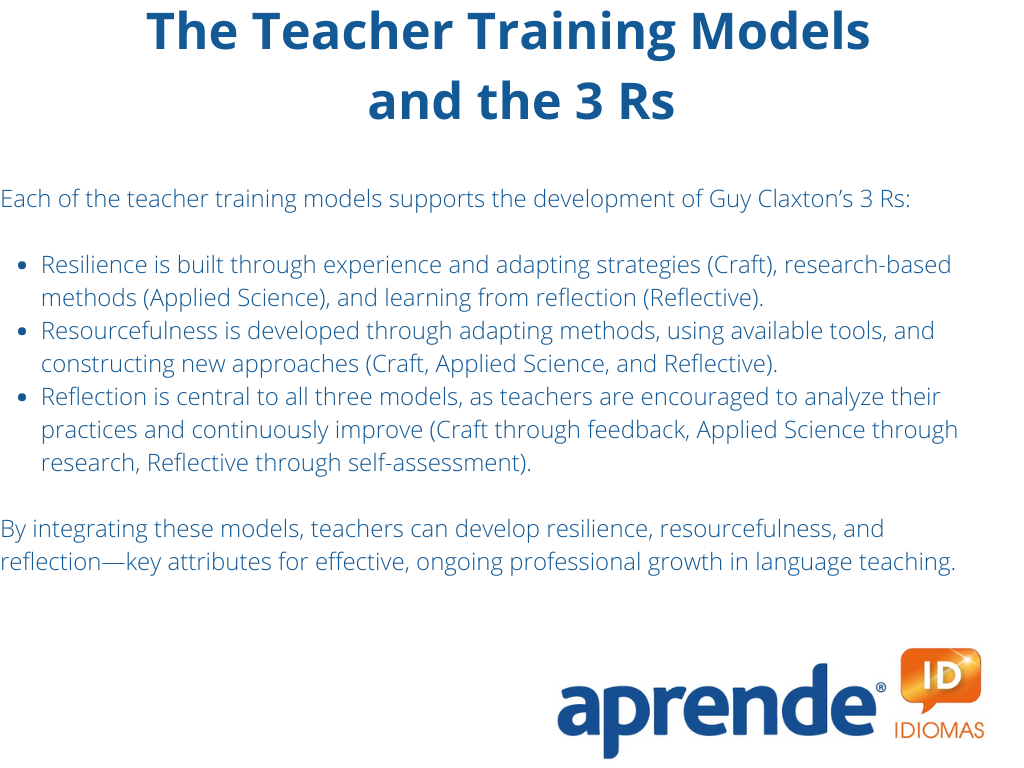
As educators, one of the keys to long-term success is not just the knowledge we impart to our students, but also the personal growth and professional development we continue to pursue ourselves. In teaching, we face numerous challenges, and how we handle those challenges is just as important as the strategies we use to teach. To support our continuous development, we can focus on three essential qualities: Resilience, Resourcefulness, and Reflection.
These three qualities—often referred to as the 3 Rs—serve as guiding principles that help us adapt, improve, and thrive in our teaching practices, ensuring that we can not only manage the challenges we face but also grow from them.
What are the 3 Rs?
- Resilience:
- Meaning: Resilience is the ability to bounce back from setbacks and continue moving forward, no matter the challenges. It’s about maintaining a positive attitude, learning from mistakes, and persisting even when things don’t go as planned.
- In Teaching: As language teachers, resilience means adapting to unexpected changes in the classroom, whether it’s dealing with difficult students, managing diverse learning needs, or navigating new teaching tools. It’s the capacity to recover and adapt after a challenge.
- Example: A lesson might not go as planned—students struggle with a new concept, or technology fails. Resilient teachers assess the situation, adjust their approach, and keep the lesson moving forward.
- Resourcefulness:
- Meaning: Resourcefulness is the ability to find creative solutions and use available tools to tackle problems or make the most of limited resources. It involves thinking on your feet and adapting to meet the needs of your students.
- In Teaching: Resourceful teachers are constantly looking for ways to engage students, optimize lesson plans, and utilize available resources efficiently. They can turn everyday classroom materials into powerful teaching tools and find ways to make lessons engaging without relying on expensive resources.
- Example: A teacher might use simple materials like sticky notes or everyday objects to teach vocabulary, grammar, or pronunciation, making the most of what’s available.
- Reflection:
- Meaning: Reflection is the practice of looking back at our experiences and learning from them. It involves thinking critically about what worked well, what didn’t, and what we can do differently in the future.
- In Teaching: Reflective teachers regularly assess their own practices, considering how they can improve their teaching methods and student engagement. Reflection is a vital tool for ongoing professional development, allowing teachers to adapt and improve their approaches continuously.
- Example: After each lesson, a teacher reflects on what was effective, what challenges arose, and what changes could be made for the next lesson to improve learning outcomes.
How the 3 Rs Enhance Teaching Practice
- Resilience:
- In the classroom, resilience helps us handle unexpected disruptions, such as a student’s behavior or a sudden change in lesson plans. It allows us to stay calm and adjust our approach without losing focus on student learning.
- Resourcefulness:
- Resourceful teachers make the most of what they have—whether it’s time, tools, or creative strategies. This quality is especially important in language teaching, where we often need to find new ways to present information to engage students with varying levels of ability and interest.
- Reflection:
- Reflection helps us grow by enabling us to evaluate our teaching methods and make adjustments for future lessons. It encourages us to be mindful of our own professional development and to identify areas where we can improve, ensuring continuous progress in our teaching careers.
How Can Teacher Trainers Use the 3 Rs in Their Practice?
As teacher trainers, we can use the 3 Rs to foster a growth mindset in our trainees and help them develop the skills needed for long-term success in the classroom:
- Encouraging Resilience:
- Train teachers to embrace challenges and view mistakes as opportunities for learning. Encourage them to develop strategies for coping with stress and setbacks in the classroom.
- Example: Share stories of difficult teaching moments and how successful educators overcame them, reinforcing that resilience is key to growth.
- Promoting Resourcefulness:
- Help teachers develop creative strategies for using limited resources. Train them to think critically about how to adapt their lessons to meet diverse student needs and how to make the best use of their available tools.
- Example: Hold workshops on how to design engaging lessons with minimal materials, or how to leverage free online resources for teaching.
- Fostering Reflection:
- Encourage a culture of reflective practice by providing opportunities for teachers to assess their own teaching. Guide them in using reflection as a tool for improvement, whether through peer feedback, journaling, or self-assessment.
- Example: Include reflective exercises in teacher training, such as having trainees write about what went well in their practice lessons and what they could do differently.
As we can see, each teacher training model nurtures key attributes that are essential for our professional development. By understanding how the Craft, Applied Science, and Reflective models connect with the 3 Rs, we can better appreciate how they shape our growth and adaptability as teachers.
While building Resilience, Resourcefulness, and Reflection is essential for growth, the goal for all of us as educators is also to make our teaching Effective, Efficient, and Effortless. By considering these three qualities, we can refine our approach to not only improve the outcomes but also simplify the processes we use.
In education, we often strive to maximize our impact as teachers while minimizing unnecessary challenges or wasted time. To achieve this, we can focus on three key principles that can guide our teaching strategies and improve both our students’ learning and our teaching practice: Effective, Efficient, and Effortless.
These principles are interconnected and can transform how we approach teaching and learning, helping us to be more focused, resourceful, and ultimately, more effective in the classroom.
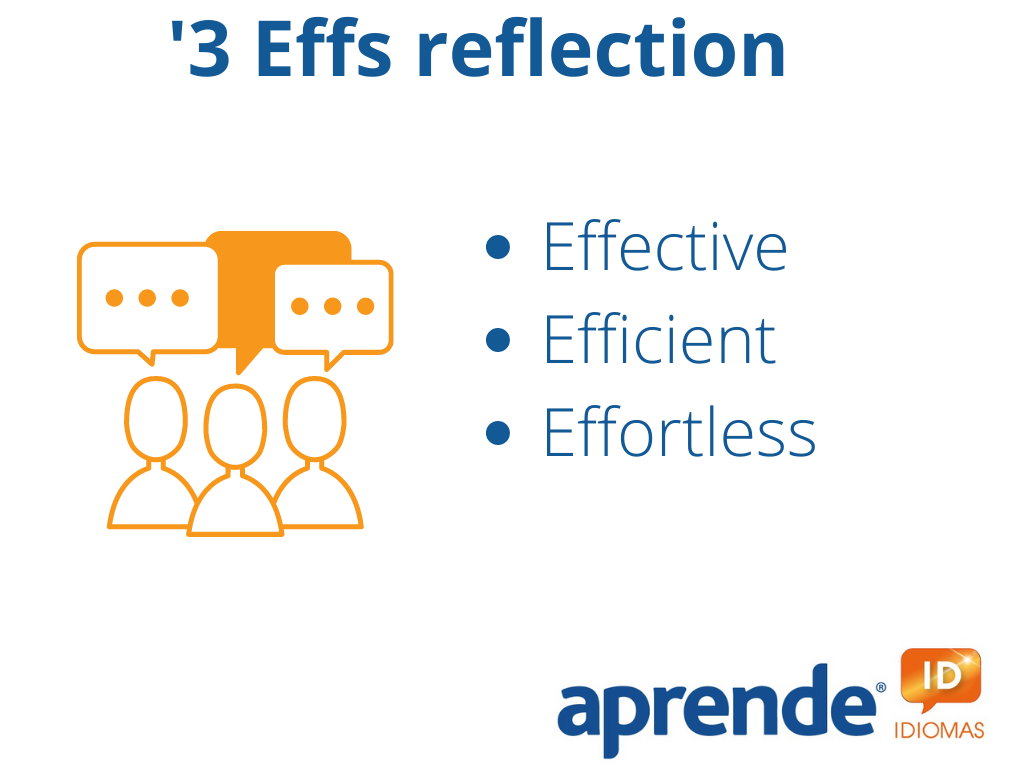
What are the 3 Effs?
- Effective:
- Meaning: Being effective means doing the right things. It’s about ensuring that the actions we take as educators are aligned with our learning goals and actually contribute to student success.
- In Teaching: An effective teacher focuses on what really matters—strategies that lead to measurable improvement in students’ understanding and abilities. It involves setting clear goals, using data-driven methods, and fostering an environment that supports student achievement.
- Example: Instead of focusing on an overwhelming number of topics, an effective lesson focuses on key concepts that will have the greatest impact on student progress.
- Efficient:
- Meaning: Efficiency means achieving maximum results with minimum effort and resources. In teaching, this involves using strategies, resources, and time wisely, avoiding redundancy and unnecessary tasks that don’t contribute to learning outcomes.
- In Teaching: Efficient teachers streamline processes, use available resources effectively, and reduce unnecessary workloads, both for themselves and their students.
- Example: Using digital tools to quickly assess students’ understanding or employing group work to cover more material in less time.
- Effortless:
- Meaning: Effortless means making things smooth and easy. It’s about creating systems and strategies that become second nature, making teaching feel more natural and less taxing.
- In Teaching: Effortless teaching isn’t about working less, but about working smarter—creating routines and environments where students can learn easily and teachers can teach without constantly fighting against obstacles.
- Example: Using well-organized lesson plans and classroom management strategies that run smoothly, reducing stress and allowing teachers to focus on what matters most—student engagement and learning.
How to Apply the 3 Effs in Teaching
- Being Effective:
- Align your teaching strategies with your learning objectives. Choose methods that are proven to work for your specific class and focus on achieving real progress, not just covering content.
- Use formative assessments regularly to gauge whether students are meeting the intended learning goals and adjust your approach accordingly.
- Being Efficient:
- Maximize classroom time by incorporating interactive activities and technology to speed up learning processes (e.g., using apps for quick quizzes or peer feedback sessions).
- Avoid unnecessary repetition or excessive preparation by having a clear plan and using resources that streamline activities (like multimedia tools or pre-made materials).
- Being Effortless:
- Create consistent routines in the classroom that students are familiar with, making it easier to transition between activities and reducing the mental effort required to manage the class.
- Focus on simplicity in your lesson plans—make sure they are straightforward and don’t overcomplicate tasks. The less effort spent on administrative tasks or complex classroom management, the more focus you can put on effective teaching.
Why the 3 Effs Matter in Teaching
By aiming for Effective, Efficient, and Effortless teaching, we set ourselves up to create an environment where:
- Students are engaged and learning because we’re focusing on the most impactful strategies.
- Time and resources are well-spent, allowing us to manage our workload more effectively.
- Teaching becomes less stressful, enabling us to enjoy the process and deliver a more fluid and natural learning experience.
These principles not only help improve our teaching practice but also enhance student outcomes, making the learning process both enjoyable and successful for all involved.
Linking the 3 Fs with the 3 Rs and Teacher Training Models:
- Effective (Doing the Right Things):
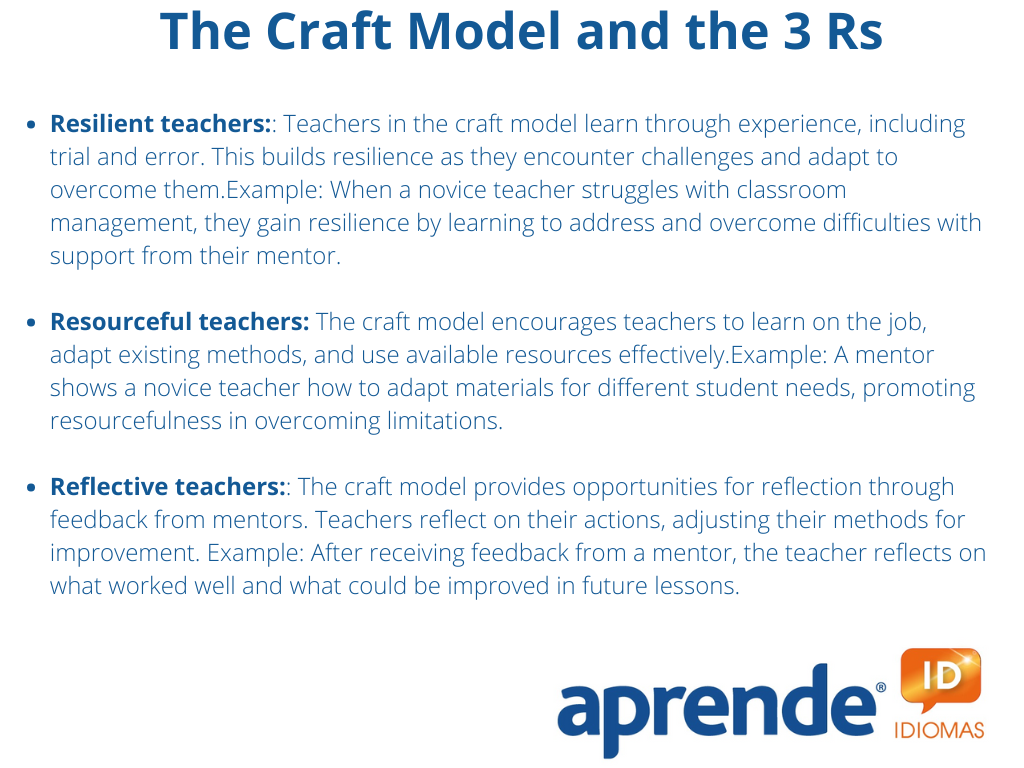
- Craft Model: Being effective in the Craft Model means choosing the right teaching strategies based on direct classroom experience. Teachers learn what works best through trial and error, ensuring they focus on what truly engages and supports student learning.
- Applied Science Model: In the Applied Science Model, effectiveness comes from applying research-backed methodologies. Teachers choose strategies that are proven to work, ensuring they focus on methods that yield the best outcomes for students.
- Reflective Model: Effective teaching in the Reflective Model comes from constant reflection on what works and what doesn’t. Teachers refine their methods to ensure they are focusing on what truly supports student growth.
- Efficient (Maximizing Impact with Minimal Effort):
- Craft Model: Efficiency in the Craft Model is about learning to teach in a way that maximizes student engagement while minimizing unnecessary complexity. Teachers streamline their practices by focusing on what they can do well, while learning to adapt quickly to classroom dynamics.
- Applied Science Model: In the Applied Science Model, efficiency comes from implementing research-based strategies that are known to work, helping teachers avoid unnecessary trial and error. This allows them to focus on high-impact activities.
- Reflective Model: Efficiency in the Reflective Model is driven by teachers’ ability to reflect on their practices, identifying and eliminating time-consuming or ineffective methods. By consistently evaluating their approach, teachers find ways to work smarter, not harder.
- Effortless (Simplifying Processes to Enhance Flow):
- Craft Model: In the Craft Model, teaching becomes effortless when teachers internalize best practices, allowing them to act naturally and fluidly in the classroom. The more experienced they become, the less effort is required to engage students effectively.
- Applied Science Model: In the Applied Science Model, teaching becomes effortless when teachers are confident in their methods, drawing on research and theory. With a strong theoretical foundation, teachers don’t have to second-guess their approach.
- Reflective Model: Effortlessness in the Reflective Model comes from a continual cycle of self-improvement. As teachers reflect, refine, and adapt their practices, they find methods that work for both them and their students, making their teaching smoother and more enjoyable.
Just as the 3 Rs help us build resilience and continuous improvement, the 3 Fs guide us in streamlining our approach to teaching. We aim to be Effective, Efficient, and Effortless—not just in terms of outcomes but in the process itself. By applying the 3 Fs, we optimize our teaching methods, ensuring that we don’t just work hard but also work smart. By combining the 3 Rs with the 3 Fs, we can not only nurture our growth as educators but also make our teaching practices more impactful and sustainable. These frameworks allow us to create a balanced, efficient, and enjoyable teaching experience for both us and our students.
Summary:
- Effective: Ensuring that we focus on what works in the classroom (Craft: trial and error, Applied Science: evidence-based practices, Reflective: refining methods).
- Efficient: Maximizing impact with less effort (Craft: streamlining practices, Applied Science: proven strategies, Reflective: eliminating ineffective methods).
- Effortless: Making teaching smoother and more natural (Craft: experience, Applied Science: confidence in methods, Reflective: adapting practices over time).
This lesson is connected to FCRDKEB01- El verdadero problema de la ejecución
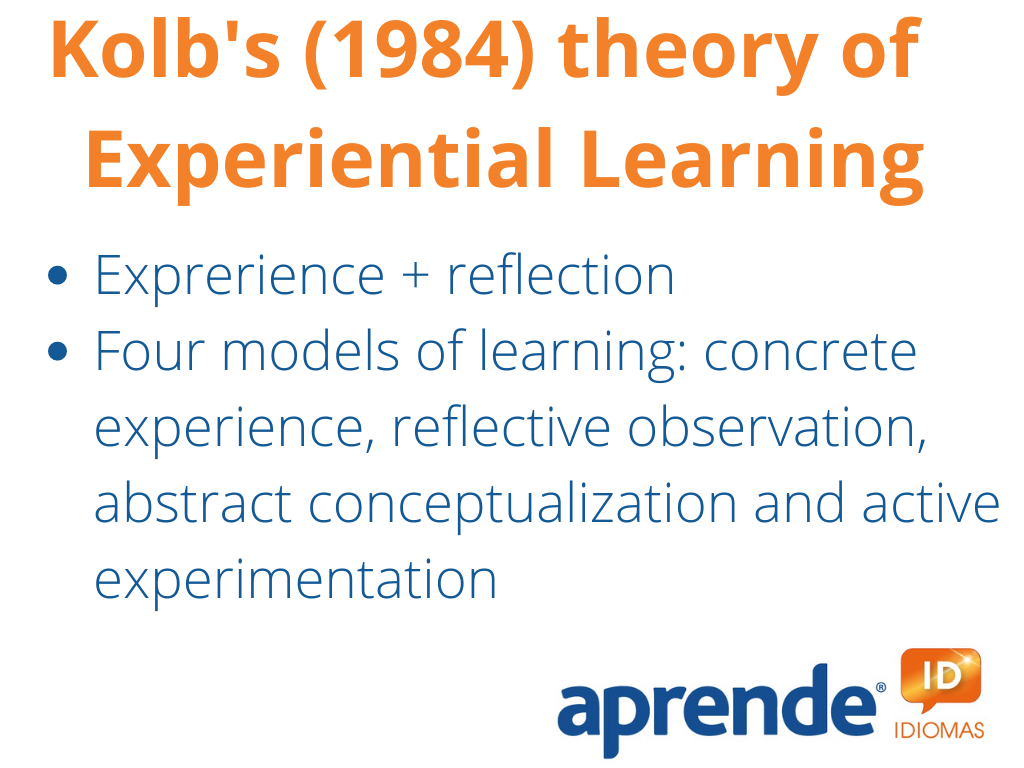
Once you have chosen the best option for your training session, it is highly recommended to consider the full cycle of Kolb’s Experiential Learning Theory. It consists on four stages of learning, which does not necessarily starts at the same point for every participant (or student).
David A. Kolb is an American educational theorist and psychologist, best known for his work on Experiential Learning Theory. He was born in 1939 and has contributed significantly to the field of education, particularly in understanding how people learn through experience. Kolb’s most influential work revolves around the concept that learning is a process rather than a simple outcome. He proposed that learning occurs through a cycle of experiencing, reflecting, thinking, and acting. He emphasized that individuals learn best when they actively engage in each of these stages.
Here’s what Kolb discovered:
- Learning is Experiential: Kolb believed that we don’t learn solely from theory or abstract concepts but through direct experiences. He emphasized the importance of the learner’s active involvement in the learning process. By engaging in real-world experiences and reflecting on them, we develop deeper understanding.
- The Experiential Learning Cycle: Kolb identified a cyclical process of learning that involves four stages:
- Concrete Experience (doing/feeling)
- Reflective Observation (reviewing/reflecting)
- Abstract Conceptualization (thinking/conceptualizing)
- Active Experimentation (planning/doing)
- Learning Styles: Kolb also developed a Learning Styles Inventory based on his experiential learning theory. He categorized learners into four types, depending on where they prefer to focus within the learning cycle:
- Converging (thinking and doing)
- Diverging (feeling and watching)
- Assimilating (watching and thinking)
- Accommodating (doing and feeling)
- Personal Growth: Kolb’s theory suggests that learning is not only about acquiring knowledge but also about personal growth and development. By engaging with experiences and reflecting on them, learners can develop new perspectives, improve problem-solving skills, and become more adaptable.
Optimal learning takes place when participants move on stage by stage through a recursive cycle. Just for us to see each stage, we will consider number 1 (Concrete experience) as the start point of something to be learnt. Please read the participant’s comments below and the corresponding stage.
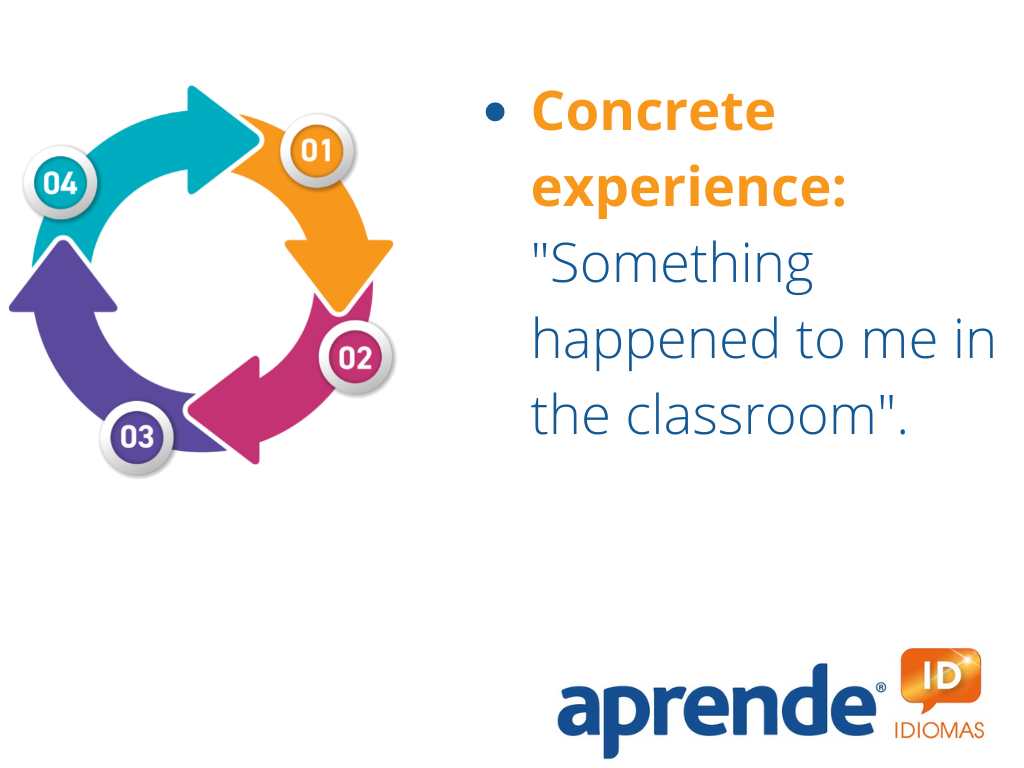
That ‘something happened’ could be an ‘aha moment‘ or a relevant situation that caught the participant’s attention (a presentation, a role-play, a task, etc). It is so relevant that it leads participants to reflect on it:
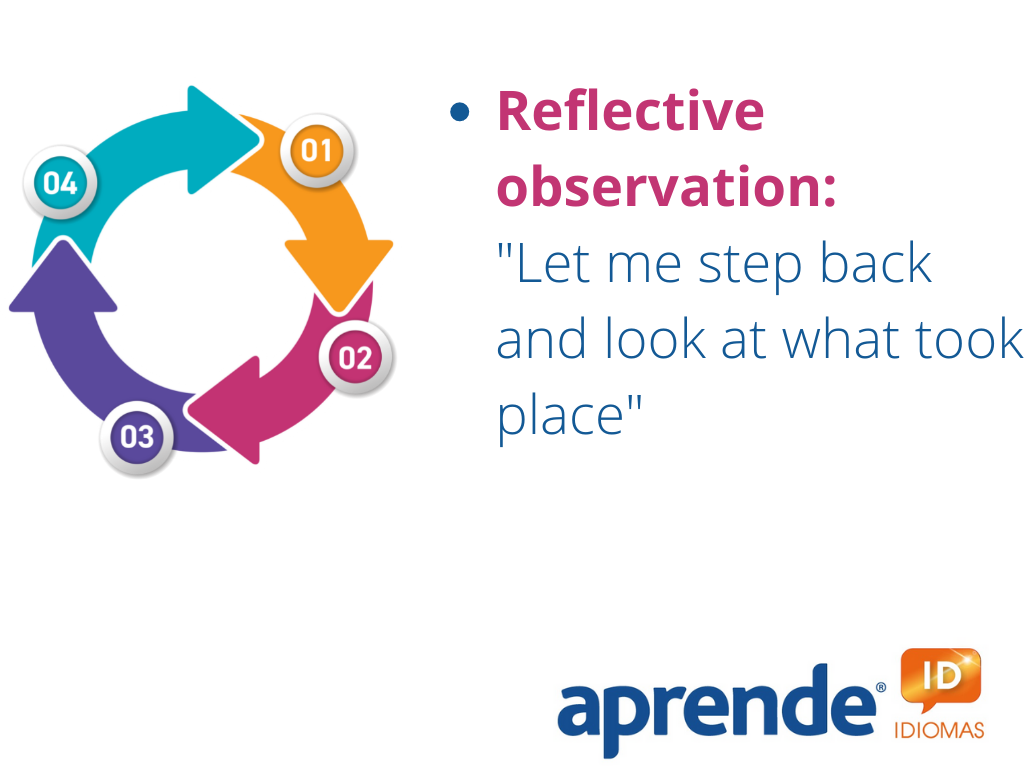
Once they have analysed, observed and reflected on that ‘something happened’, they can start creating concepts, theories, or drawing conclusions. It becomes a ‘something happens’ this way… when… because…
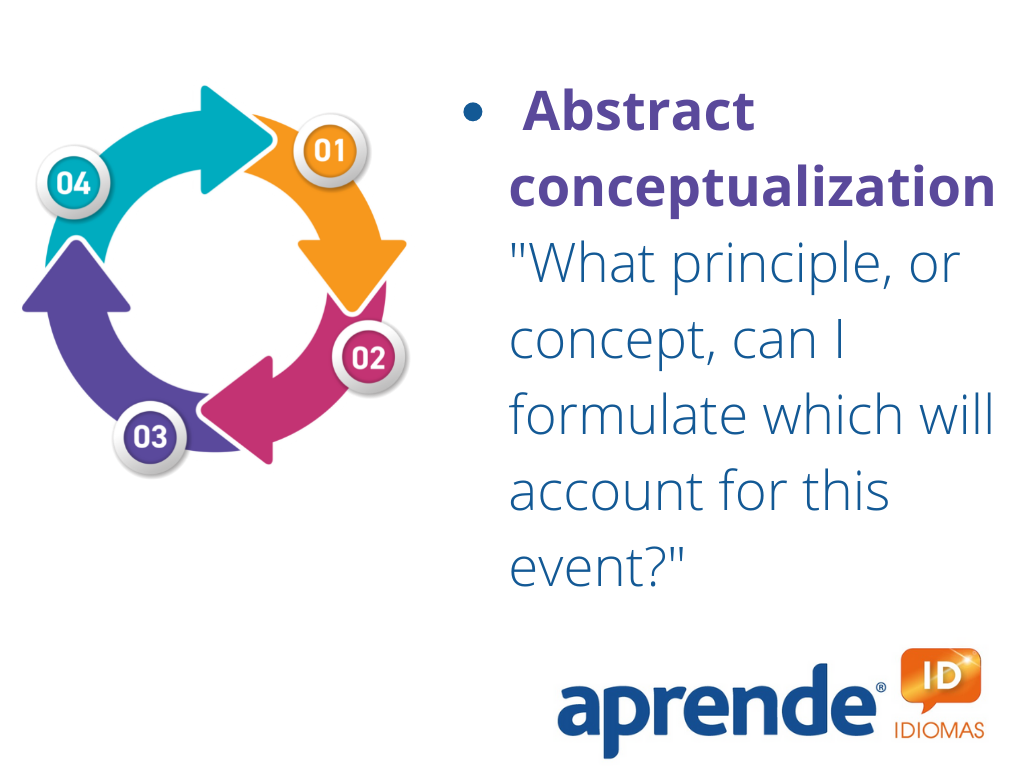
After having a clear idea of why, when and how ‘something happens’, it becomes easier for participants to implement or use what they have just learnt3.
3 AmE: learned / BrE: learnt
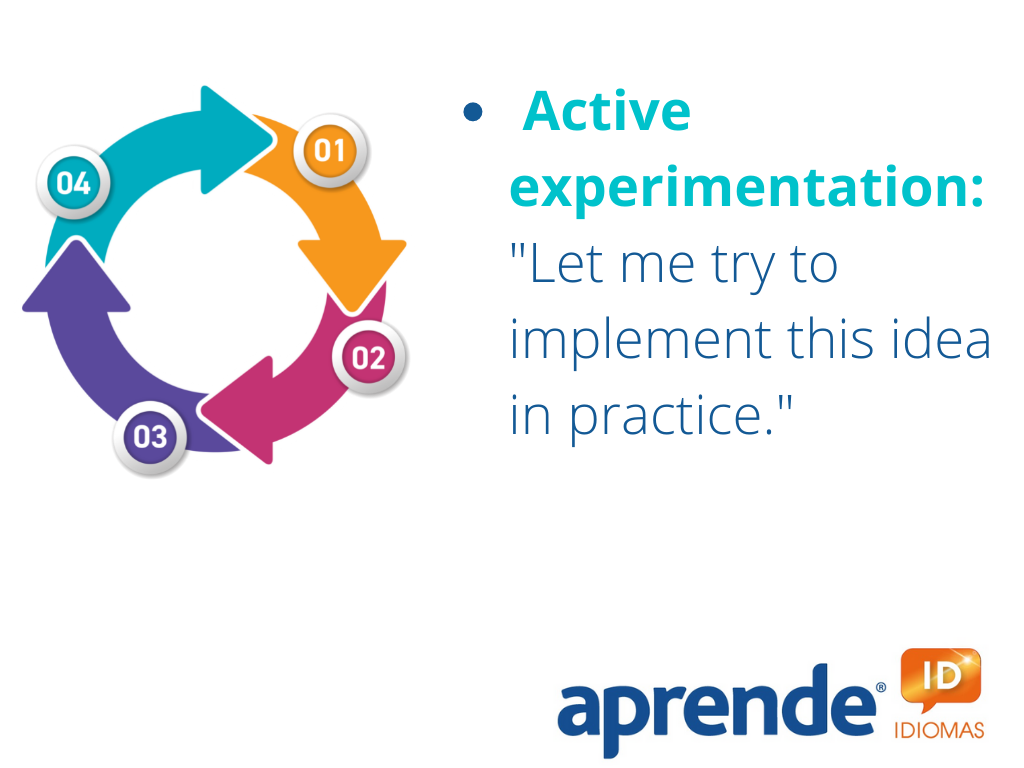
Active experimentation involves real-time action which entails further concrete experience, and so on. It is quite important to consider that not all the students start learning from a Concrete Experience. Just as the different Multiple Intelligences or VAK systems, Kolb’s Experiential Learning start point for learning is different from one participant to another one.
For this reason, we can always find more participative learners who are not worried about mistakes, they are doers. They get actively involved in something rather than observing or reflecting on it. Their natural start point of learning is the Active Experimentation. Whereas we can also have participants who are reluctant to experiment without observing others and analysing the principles before doing, -because their natural start point is Reflective Observation. Thus, we must consider these elements when assessing learners.
Kolb’s Experiential Learning model itself is unrealistic if it is not enriched by external input. There is a lot to be learnt from experienced teachers and coordinators (Craft Model), from research and reading (Applied Science Model), and reflection (Reflective Model).
In addition, we should consider the type of content to include in your training sessions. Some ideas could be: input, experiential work, and tasks.
How Kolb’s Experiential Learning Applies specifically to Language Teaching
As language teachers, Kolb’s Experiential Learning Cycle is especially useful because it aligns with the dynamic, interactive nature of language learning. Rather than focusing solely on theory or memorization, this theory encourages us to create opportunities for students to actively experience the language, reflect on their learning, conceptualize language rules, and experiment with new skills.
- Concrete Experience:
- Have students engage in real-life communication activities, such as group discussions, presentations, or debates in the target language.
- Example: Students engage in a simulated conversation in a market setting, practicing negotiation and vocabulary.
- Reflective Observation:
- After the activity, encourage students to reflect on their experience. What vocabulary did they use? What grammar structures worked? What challenges did they face?
- Example: After the conversation activity, ask students to reflect on their performance and discuss as a group what went well and what they would change next time.
- Abstract Conceptualization:
- Introduce the theory or grammar rules that apply to the activity, helping students make sense of the language they used.
- Example: Explain the use of conditionals or negotiation strategies in English, relating them to what students just practiced.
- Active Experimentation:
- Provide opportunities for students to use the language again, applying the new concepts or strategies they’ve learned in new contexts.
- Example: Have students perform another activity, perhaps in pairs or individually, using the new grammar or vocabulary.
How Teacher Trainers Can Use Kolb’s Experiential Learning Theory
As teacher trainers, Kolb’s theory offers a powerful framework for professional development. By incorporating experiential learning into our training programs, we can provide more engaging and practical experiences for teachers, enabling them to actively reflect, conceptualize, and apply new teaching techniques.
- Concrete Experience:
- Create opportunities for trainees to engage in teaching simulations, role-plays, or classroom observation. Allow them to practice using teaching strategies and tools in real or simulated environments.
- Example: Have trainees design and teach a lesson to a group of peers, putting theory into practice.
- Reflective Observation:
- After the simulation or observation, provide time for trainees to reflect on their performance. What strategies worked well? What were the challenges? This reflection phase helps consolidate learning.
- Example: Encourage trainees to write a self-assessment or discuss in groups how they can improve the next time.
- Abstract Conceptualization:
- Use the reflection to introduce theories, teaching models, or frameworks that align with the trainees’ experiences. Help them connect their practice to broader teaching concepts.
- Example: After reflecting on classroom management techniques, introduce models of effective classroom control or discuss pedagogical theories that relate to their experiences.
- Active Experimentation:
- Allow trainees to experiment with the new concepts in their teaching. Provide them with opportunities to try out different strategies in real or simulated environments, reinforcing the application of their new skills.
- Example: Have them practice a different teaching strategy in a mock classroom setting or with peers, refining their approach through trial and feedback.
As language teachers, we are aware that students don’t all learn in the same way. While some may excel at grammar, others might find speaking or listening easier. This is where Howard Gardner’s theory of Multiple Intelligences comes in. It provides us with a more holistic understanding of how students process information, solve problems, and express creativity, highlighting that intelligence is not a single, fixed trait but a diverse set of capabilities.
In 1983, psychologist Howard Gardner revolutionized this understanding by introducing the theory of Multiple Intelligences. Gardner proposed that intelligence is not a single, static ability, but rather a set of distinct capabilities. According to his theory, everyone has a combination of different intelligences, each of which can be developed and nurtured in different ways.
Gardner’s theory is particularly valuable in language teaching, where students often demonstrate different strengths and challenges. By recognizing and addressing these multiple intelligences, we can tailor our lessons to support each learner’s unique abilities, allowing them to thrive in language acquisition.
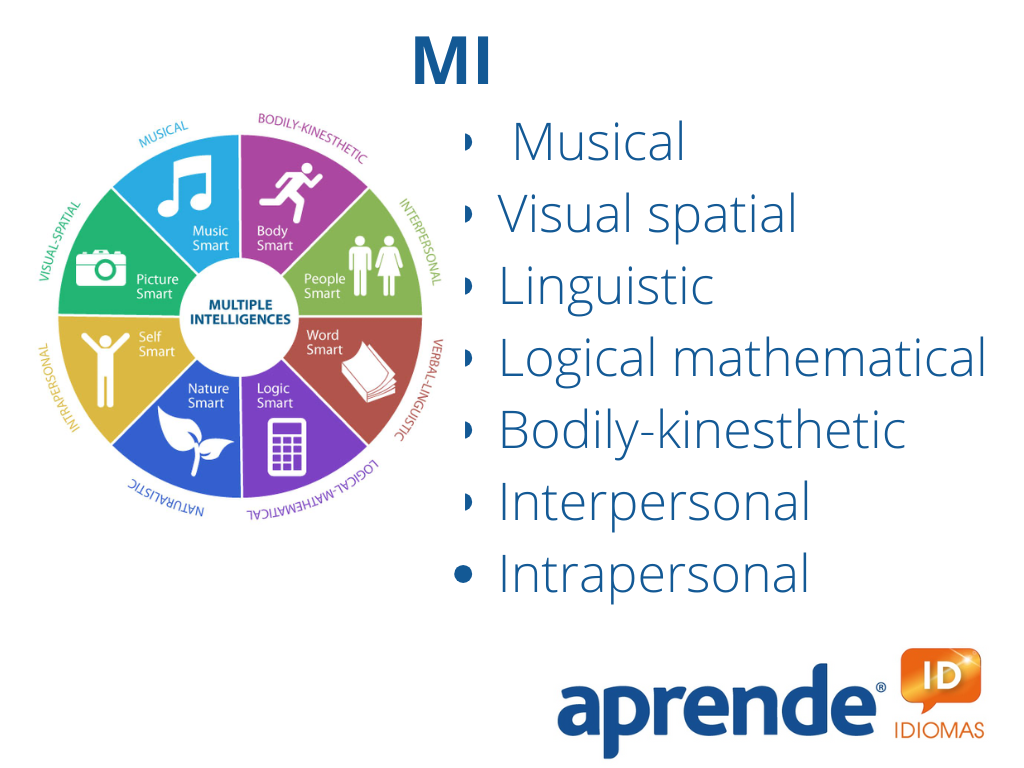
- Linguistic Intelligence:
- Application: Use activities that involve reading, writing, and speaking. Encourage students to express themselves through creative writing, debates, and storytelling. Offer opportunities for students to explore language through poetry, drama, and word games.
- Example: Have students write short stories or perform dialogues to engage their linguistic intelligence.
- Logical-Mathematical Intelligence:
- Application: Incorporate language puzzles, riddles, or activities that require logical reasoning, like organizing language patterns or working with grammar rules in a structured way.
- Example: Use problem-solving activities such as decoding language patterns, analyzing sentence structures, or organizing vocabulary into categories.
- Spatial Intelligence:
- Application: Use visual aids like maps, diagrams, and charts. Encourage students to create visual representations of vocabulary or grammar rules. Interactive activities like role-plays can also engage students in visualizing scenes and settings.
- Example: Have students create mind maps or visual dictionaries for vocabulary.
- Musical Intelligence:
- Application: Incorporate songs, rhymes, and chants into lessons. Language learning through music can help with pronunciation, rhythm, and intonation. Use songs or podcasts to help students understand the rhythm of the language.
- Example: Use a song to teach new vocabulary or grammar points, focusing on rhythm and sound.
- Bodily-Kinesthetic Intelligence:
- Application: Incorporate physical activities into lessons. Language learning through movement can include role-playing, gestures, or games that require physical interaction.
- Example: Use games like charades or perform role-play scenarios to get students moving while practicing language.
- Interpersonal Intelligence:
- Application: Foster group work and pair activities where students interact with each other. Encourage collaborative projects, discussions, and peer feedback sessions.
- Example: Organize debates, group discussions, or peer teaching sessions to help students practice communication and collaboration.
- Intrapersonal Intelligence:
- Application: Encourage self-reflection and personal connections to the language. Have students set personal goals, keep journals, or reflect on their language-learning progress.
- Example: Have students write reflective journals about their language learning journey, identifying areas they feel confident in and areas they want to improve.
- Naturalistic Intelligence:
- Application: Integrate language lessons with themes from nature and the environment. Use outdoor activities or explore cultural vocabulary related to the natural world.
- Example: Teach vocabulary related to the environment or use outdoor activities to explore nature-based topics while practicing the language.
Using Multiple Intelligences in Teacher Training
As teacher trainers, we can use Gardner’s theory of Multiple Intelligences to guide the professional development of language instructors, ensuring that we provide a more tailored and effective training experience. Just like students, teachers themselves have different strengths, and recognizing these can help trainers create more engaging and comprehensive training programs.
- Diversifying Training Methods:
- Provide a variety of activities that cater to different intelligences. For instance, linguistic tasks might include reflective writing or presenting teaching strategies, while bodily-kinesthetic activities might involve role-playing classroom scenarios or interactive games that model language teaching.
- Example: For a session on classroom management, incorporate interpersonal intelligence through group discussions and role-plays, and logical-mathematical intelligence through problem-solving activities.
- Fostering Reflection and Self-Development:
- Encourage teachers to reflect on their own strengths and areas for development using intrapersonal intelligence. Have them set personal goals for improving certain areas of their teaching, such as pronunciation or student engagement.
- Example: Use journaling or self-assessment tools where teachers can evaluate their teaching style, explore how they engage different types of learners, and set goals for future growth.
- Group Dynamics and Collaboration:
- Utilize interpersonal intelligence by promoting collaboration and peer feedback. Organize activities where teachers work together to create lesson plans, share strategies, and observe each other’s teaching.
- Example: Pair teachers to observe one another and provide constructive feedback, fostering a collaborative learning environment.
- Adapting Content Delivery:
- Tailor the delivery of training sessions to accommodate various learning styles. Musical intelligence can be integrated through the use of songs or rhythm to enhance memory, while logical-mathematical intelligencecan be engaged through structured analysis of language teaching theories and methodologies.
- Example: Incorporate a video or podcast for musical intelligence, followed by a group discussion and analysis of teaching methods that support logical-mathematical intelligence.
- Encouraging Hands-On Experience:
- Incorporate bodily-kinesthetic intelligence by giving teachers opportunities to practice what they’ve learned through simulations, role-playing, or interactive workshops.
- Example: Organize a practical session where teachers act out a lesson plan, allowing them to engage in physical movement while applying new teaching techniques.
As language teachers, understanding the VAK system can significantly improve how we cater to the different needs of our students, making our lessons more inclusive and engaging.
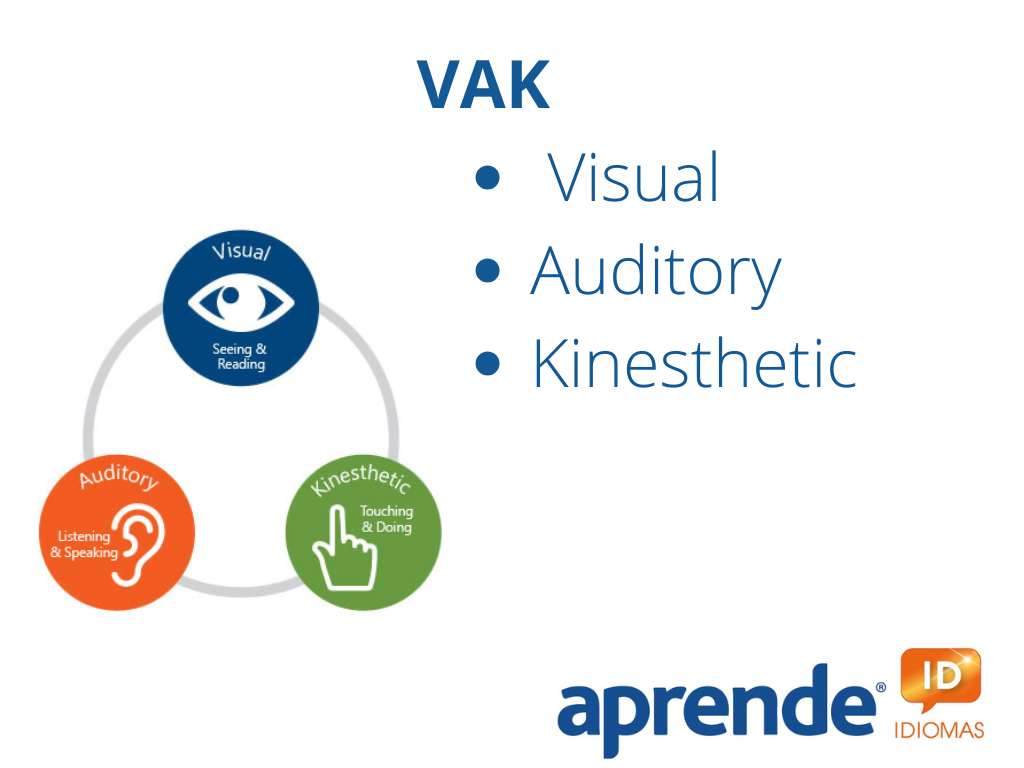
- Engaging Visual Learners:
- Use visual aids such as flashcards, posters, and multimedia presentations to reinforce vocabulary and grammar.
- Create visual representations of sentence structures or vocabulary with charts and mind maps.
- Engaging Auditory Learners:
- Encourage listening activities such as podcasts, songs, or language exercises to improve listening comprehension and pronunciation.
- Use discussions and oral practices to reinforce new language concepts.
- Engaging Kinesthetic Learners:
- Incorporate hands-on activities like language games, role-playing, or walking debates where students physically engage with the material.
- Encourage activities that allow students to move around the room while practicing new vocabulary or grammar in context.
How Trainers Can Use the VAK System in Teacher Training
As teacher trainers, applying the VAK model can help us tailor professional development sessions to address the learning preferences of our trainees. By offering diverse learning opportunities, we can ensure that trainers grasp and retain the material more effectively.
- Visual Learners:
- Training Methods: Use slides, videos, infographics, and flowcharts to explain key concepts in teaching methodologies.
- Example: Show visual examples of classroom setups or lesson plans to help trainees better understand teaching strategies.
- Auditory Learners:
- Training Methods: Incorporate discussions, lectures, podcasts, and recorded testimonials from experienced teachers.
- Example: Have trainees listen to recordings of successful teaching practices or engage in group discussions about teaching challenges and strategies.
- Kinesthetic Learners:
- Training Methods: Use role-playing, simulations, and physical activities to help trainers practice new skills and methods.
- Example: Design interactive workshops where trainees can practice classroom management or teaching techniques by physically enacting them with their peers.
Input and Its Role:
- Input should not be presented in isolation but rather preceded by tasks, questions, or discussions to ensure that participants engage with the material. This helps activate prior knowledge and fosters critical thinking, aligning with Kolb’s Experiential Learning Cycle, where learners reflect and experiment with new information.
- Using flipped classrooms or reinforcement of previous sessions helps ensure that participants process information actively. The purpose is for learners to construct meaning from the input, not just accept it as factual knowledge.
Experience-Based Tasks:
- Tasks like lesson observations, classroom teaching, experimentation, and inquiry help embed learning through practice and reflection. These tasks are grounded in experiential learning and provide opportunities to apply new knowledge in real-world contexts, aligning with Kolb’s Experiential Learning Cycle and the 3 Rs (especially Reflection).
Trainer-Led and Autonomous Tasks:
- The focus on critical analysis, problem-solving, comparison, and debates aligns well with promoting deeper engagement and helping participants form personal beliefs, which supports resourcefulness and reflection (from the 3 Rs).
Presentation and Explanation:
- The effectiveness of presenting new information hinges on making it clear, engaging, and aligned with learners’ interests. Understanding perception is vital: a presentation should appeal to multiple senses(visual, auditory), using strategies that cater to different learning styles, as seen in the VAK model (Visual, Auditory, Kinesthetic), or even the VARK model (which adds Reading/Writing preferences).
- Short-term memory and the need for reinforcement is an important point. This supports the idea of breaking down information and using methods like summarization, repetition, and reinforcement to help ensure retention and understanding, a key part of effective learning.
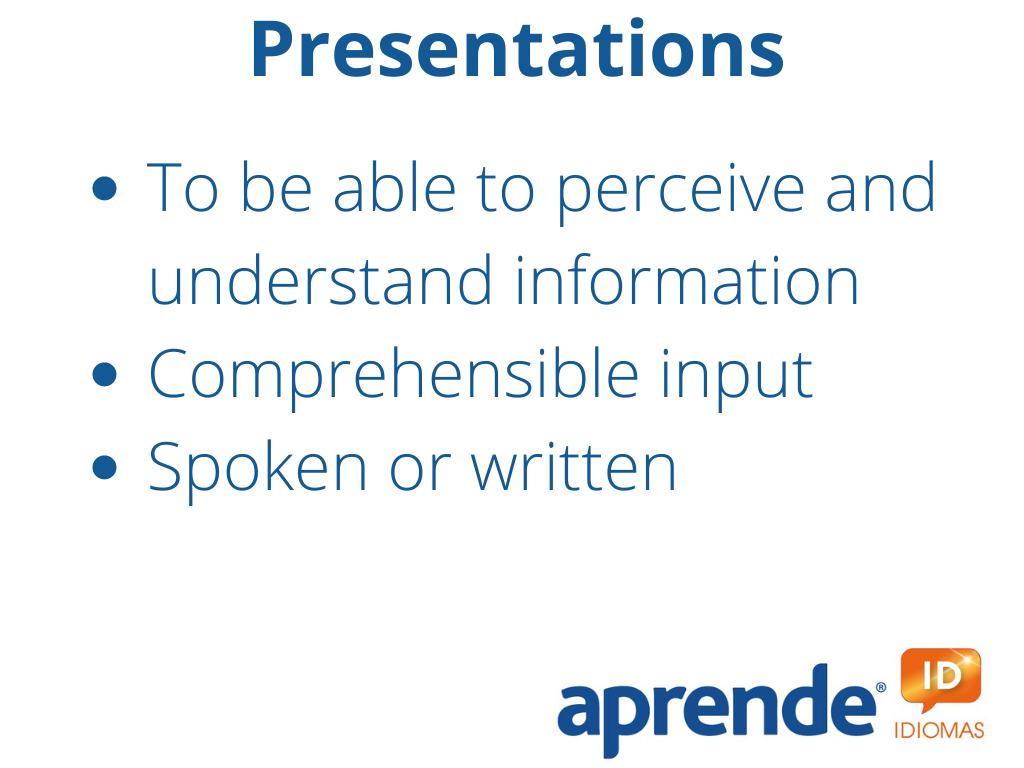
There are four main elements to consider when assessing an effective presentation. Effectiveness is not ‘universal’. What works with specific participants, might not work with others. For this reason, focusing on specific targets or contexts is important. Therefore, assessing presentations vary from one school to another one, from one section of a school to another one, and sometimes from one group to another one.
What happens in effective presentations in each of the following elements?
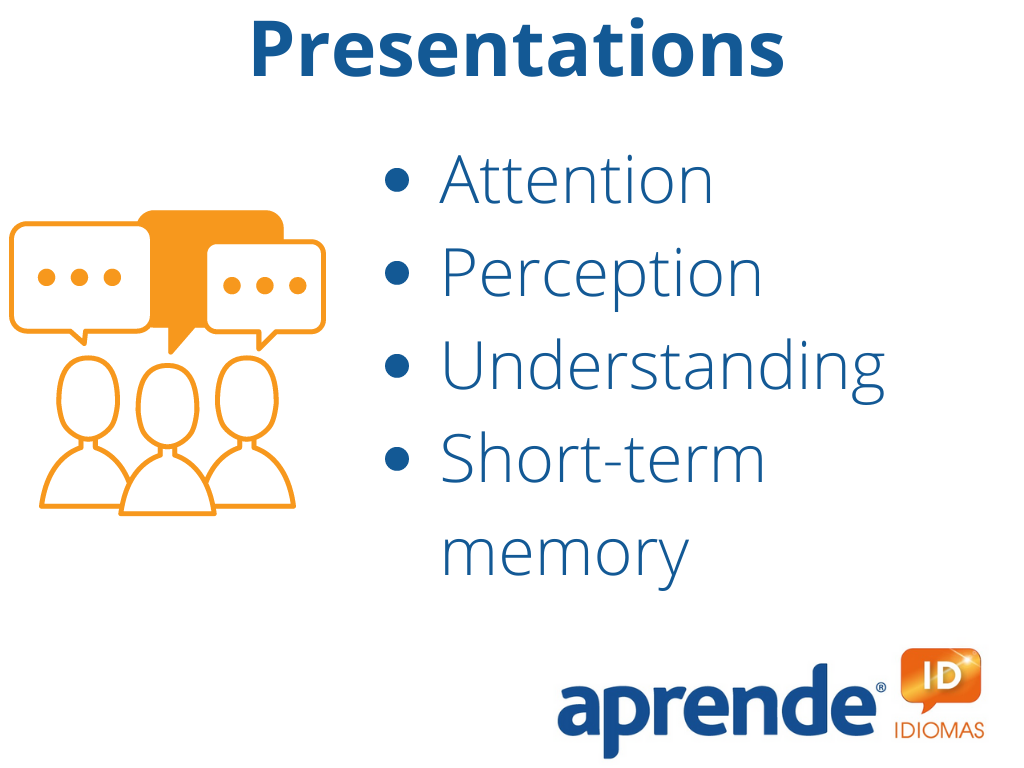
In an effective presentation, participants are alert and focused. The target must be perceived useful and interesting. Unexpected information, blended contents, or a challenging -not threatening- way of presenting new information could help or hinder attention.
Perception also affects effectiveness of a presentation, clarity could be perceived by senses (visible or audible materials), by the opportunities for reinforcing new information in order to complete their own process of experiential learning, among other elements.
Understanding information implies connecting prior knowledge and new information and moving through deeper comprehension of a topic (taxonomies)
We need to deal with short-term memory. For this reason, considering the VAK systems or even the VARK model could be helpful. If the presentation or explanation is lengthy, a brief restatement of the main points might be useful.